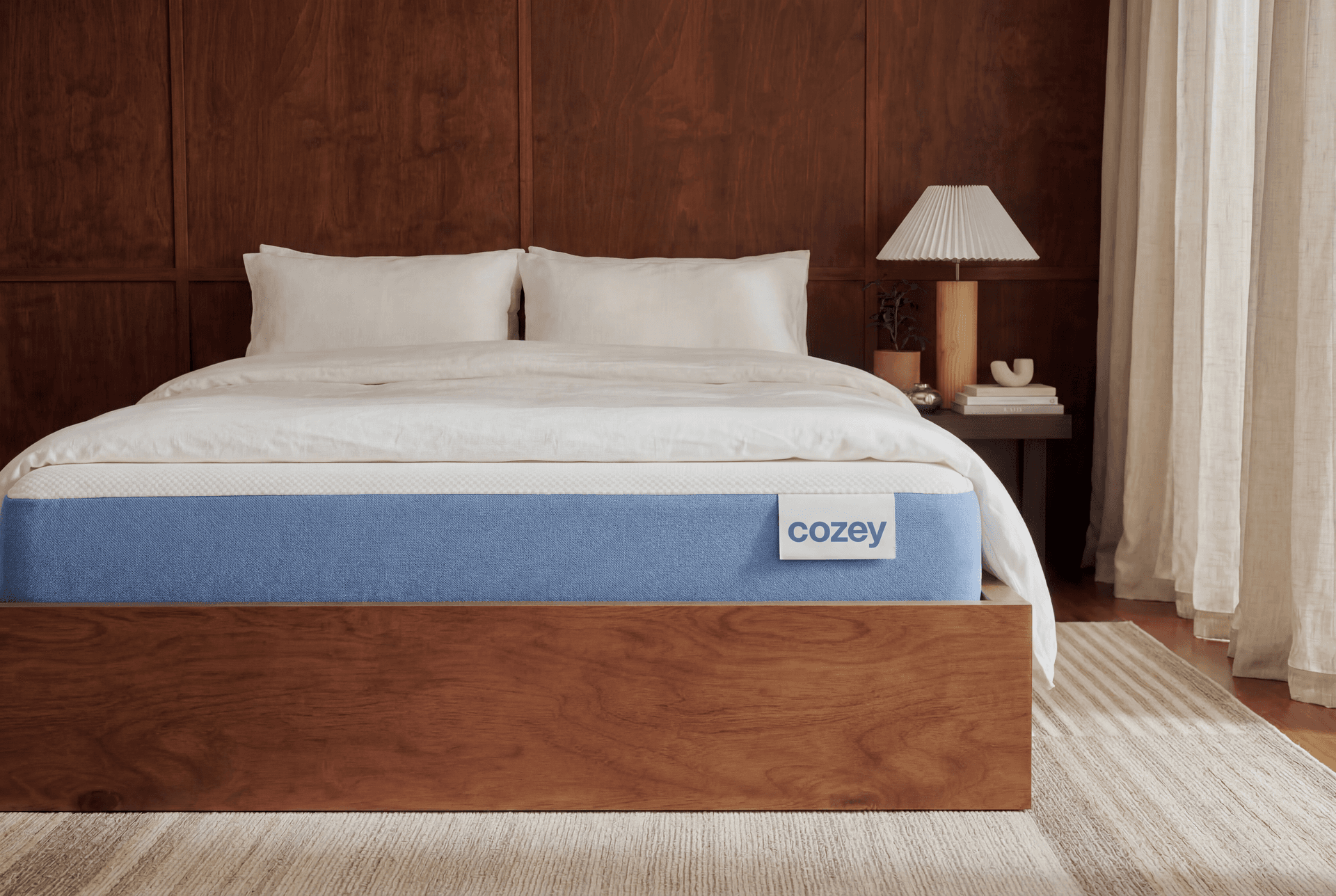
Foam and hybrid mattresses are the two most common mattress types on the market, and they suit different sleepers for different reasons. The choice is not about which is better overall — it is about which construction matches how you sleep, who you share a bed with, and what you prioritise in terms of feel and support. This guide covers what each type actually is, where each performs best, and how to decide.
What is a foam mattress
A foam mattress is constructed entirely from foam layers, typically a combination of a comfort layer on top and a denser support foam beneath. There is no metal coil system — the foam itself provides both cushioning and structure.
The most common concern buyers have about foam mattresses is heat retention. Traditional memory foam is temperature-sensitive: it softens in response to body heat, which can cause it to trap warmth and sleep uncomfortably hot.
Cozey's foam mattress uses Serene foam, which differs from traditional memory foam in one important way: it is not temperature-sensitive. Serene foam contains microscopic air capsules that provide pressure relief and reduce motion transfer without the heat-trapping properties of standard memory foam. For buyers who want the contouring feel of foam without the risk of sleeping hot, this addresses the most common objection to the category.
Foam mattresses also have a meaningful advantage for couples or light sleepers: motion isolation. Because there is no coil system to transfer movement, a foam mattress absorbs disturbance at the source. If one person shifts position at night, the other is much less likely to feel it.
What is a hybrid mattress
A hybrid mattress combines a layer of foam or other comfort material on top with a coil spring system beneath. The coils provide the base support and structure; the foam layer adds cushioning and surface feel. The result is a mattress that offers more bounce and airflow than a pure foam mattress, while still delivering more contouring and motion isolation than a traditional innerspring.
The coil system in a hybrid mattress creates natural airflow through the mattress core, which helps regulate temperature during sleep. For sleepers who run warm, this is a practical advantage over traditional foam — though, as noted above, not all foam mattresses carry the same heat risk.
Hybrids also tend to feel more responsive underfoot. If you move positions frequently during sleep, or if you sit on the edge of the bed regularly, the coil system provides more immediate pushback than foam alone.
How to choose between foam and hybrid
The right mattress type depends on how you sleep and what you find most disruptive.
Sleep position: Both Cozey mattress options are medium-firm, which suits back and side sleepers well. Side sleepers benefit from the pressure relief that foam layers provide at the shoulder and hip. Back sleepers are well supported by either type. Stomach sleepers may find medium-firm feels softer than ideal, and should consider this before buying regardless of foam or hybrid construction.
Temperature: If you sleep hot, a hybrid's coil system offers better natural airflow than most foam mattresses. That said, Cozey's Serene foam mattress is specifically designed to avoid the heat-trapping property of traditional memory foam, which makes it a more viable option for warm sleepers than conventional foam.
Motion sensitivity: If you or your partner is a light sleeper who is easily disturbed by movement, a foam mattress generally provides better motion isolation than a hybrid. The coil system in a hybrid transfers some movement, though pocket coil designs minimise this compared to older interconnected spring systems.
Feel preference: Foam mattresses have a softer, more enveloping feel. Hybrids feel more responsive and have more bounce. If you have slept on both previously and have a clear preference, that is worth prioritising.
Materials and certification
Both Cozey mattress types are made in Canada and use CertiPUR-US certified foams. This certification means the foams have been tested and verified to be free from heavy metals, formaldehyde, and phthalates, and to meet standards for low VOC emissions. For buyers with health or indoor air quality concerns, this is a verified standard rather than a marketing claim.
Both mattress types come with Cozey's 15-year warranty covering defective parts not related to consumer-caused damage or modifications.
Bed base compatibility
Whichever mattress type you choose, the base it sits on affects both performance and warranty validity. Cozey mattresses are compatible with solid platform beds, slatted bases with gaps no wider than 3 inches and slats at least 2 inches wide, solid non-flexing box foundations, and adjustable bases. Wire grid or coiled box springs are not compatible. Queen and king sizes require at least one centre support beam in the base.
If you are buying a mattress and bed frame at the same time, see compatible bed frame for guidance on what to look for. For help planning the rest of your room around a new bed, the bedroom setup guide covers storage and layout decisions.
Browse Cozey's foam and hybrid mattress to compare sizes and options. If you are also choosing a bed frame, the Ara Bed collection is available in options compatible with both mattress types.