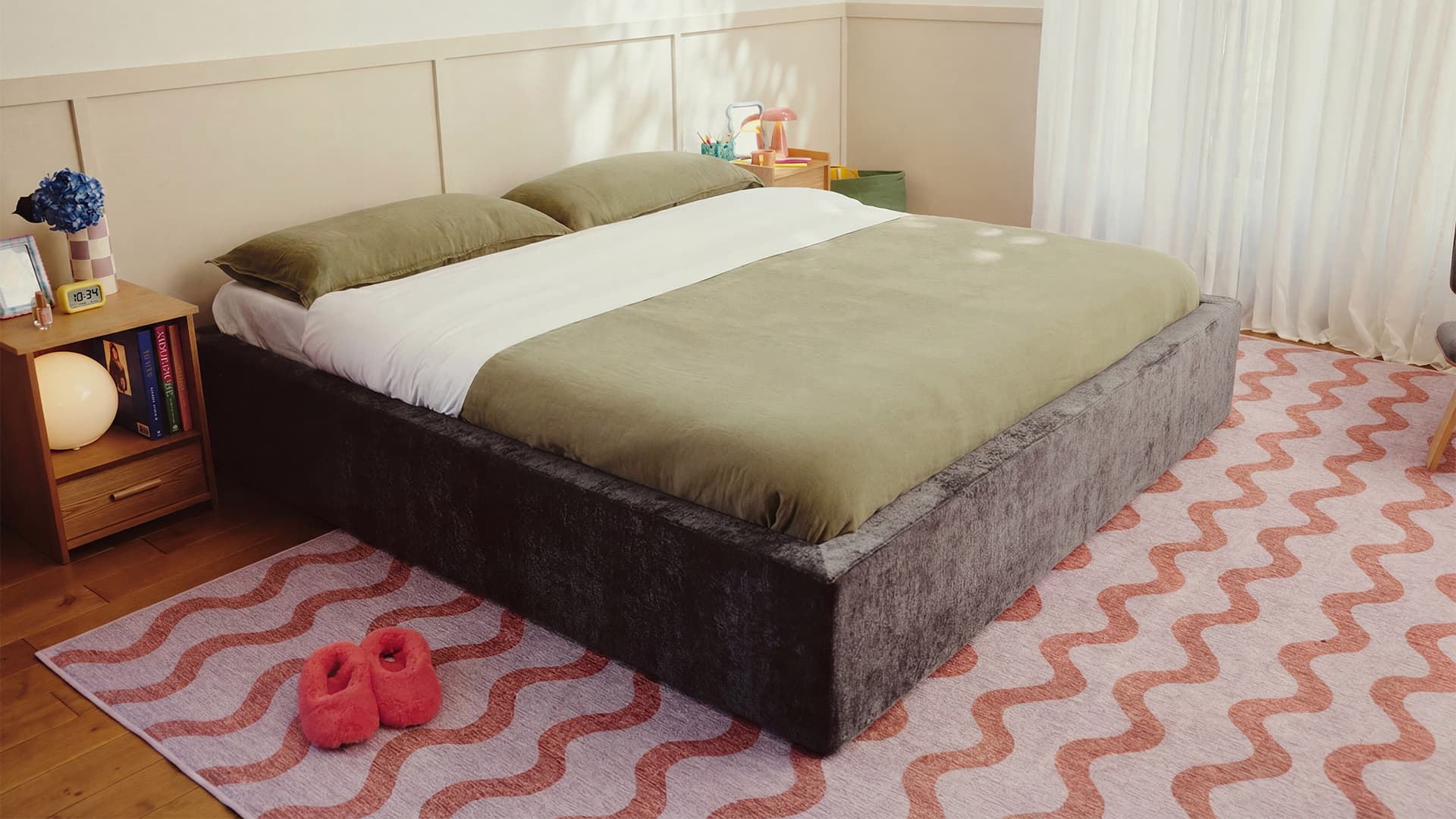
Choosing bedroom furniture is easier when you treat it as a sequence rather than a single decision. Most people feel overwhelmed because they try to plan everything at once. Start with the bed frame, build storage around what your room actually needs, then add the smaller pieces last. This guide walks through that order and covers the questions that come up most — matching finishes, storage decisions, and what you actually need for a first apartment.
Start with the bed frame
The bed frame is the right starting point because everything else in the room works around it. It determines the visual weight of the space, how much floor area remains, and whether you need additional storage furniture at all.
When choosing a bed frame, the two most important decisions are size and base type.
Size should be based on your room dimensions first, not preference. Measure the room before you shop. A Queen frame in a room under 150 square feet can leave insufficient walkway on the sides; a Double may be the more practical choice. As a guide, leave at least 24 inches of clearance on either side of the bed.
Base type determines whether you need a box spring and affects the overall height of the sleeping surface. A platform bed has a flat, solid or slatted base that supports a mattress directly — no box spring required. A standard bed frame typically sits higher and requires a box spring or foundation to reach its intended height.
For most first apartments and smaller bedrooms, a platform bed is the more practical choice. The lower profile keeps the room feeling open, and the absence of a box spring reduces both cost and visual bulk. For a fuller breakdown, see choosing a bed frame.
Browse Cozey's bed frames to compare available options and finishes.
Decide on storage before anything else
Once you have chosen a bed frame, storage is the next decision — and it should be made before you buy a dresser, wardrobe, or any other piece.
The right storage approach depends on one question: how much closet space do you have?
If closet space is limited: A platform bed with built-in storage drawers is the most space-efficient solution available. The drawers sit within the bed base itself, which means you get meaningful storage capacity — typically enough to replace a standalone dresser — without adding another piece of furniture to the floor plan. In a smaller bedroom, removing a dresser from the layout can free up 3 to 5 square feet of floor space, which is significant.
Cozey's platform beds with storage are designed specifically for this use case. For anyone furnishing a first apartment or a room without generous closet space, a storage bed is the practical starting point, not an optional extra.
If closet space is adequate: A standard platform bed paired with a standalone dresser gives you more flexibility in how you organise clothing. A tall, narrow dresser uses less floor space than a wide, low one while providing similar capacity — worth keeping in mind in a smaller room.
If your storage needs are high: A storage bed and a dresser can work together. The bed handles folded items and linens; the dresser takes care of the rest. For more on maximising storage in a limited space, see bedroom storage.
Add nightstands last
Nightstands are functional, not structural. They do not anchor the room the way a bed frame does, and they do not solve a storage problem the way a storage bed or dresser does. Buy them after the larger decisions are made.
The main practical choice with nightstands is drawers versus open shelves. A nightstand with one or two drawers contains clutter; an open-shelf alternative displays it. In a smaller bedroom where visual tidiness affects how spacious the room feels, drawers are the more useful option.
If floor space is tight, a wall-mounted shelf at bed height eliminates the nightstand footprint entirely while still providing a surface.
Matching vs mixing finishes
A bedroom set — bed frame, mattress, and nightstands from the same collection in the same finish — is the most straightforward way to furnish a bedroom cohesively. Because the pieces are designed to work together, you do not need to think about whether finishes will clash or proportions will feel off. For anyone furnishing a first apartment or a new bedroom from scratch, it is the lowest-friction starting point.
If you prefer to mix pieces rather than buy a full set, the most reliable approach is to anchor the room with one dominant finish on the bed frame, then select other pieces in the same finish family. Warm wood tones, cool whites, and darker neutrals each work as a consistent through-line. Two finishes in a room is a reasonable ceiling — three or more requires more deliberate planning to avoid a disjointed result.
Cozey's bedroom range includes coordinating pieces available in multiple finishes. Browse the full bedroom collection to see what is currently available as a set.