In a small bedroom, storage comes down to two things: choosing furniture that does more than one job, and using vertical and underutilised space that most layouts leave empty. The most effective changes are furniture decisions made before the room is set up, not organisational products added after. This guide covers the furniture types and layout strategies that make the biggest practical difference in a limited space.
Start with the bed: the single biggest storage decision
The bed occupies more floor space than any other piece of furniture in the room. What you put under it, and whether that space is accessible, determines a significant portion of your available storage.
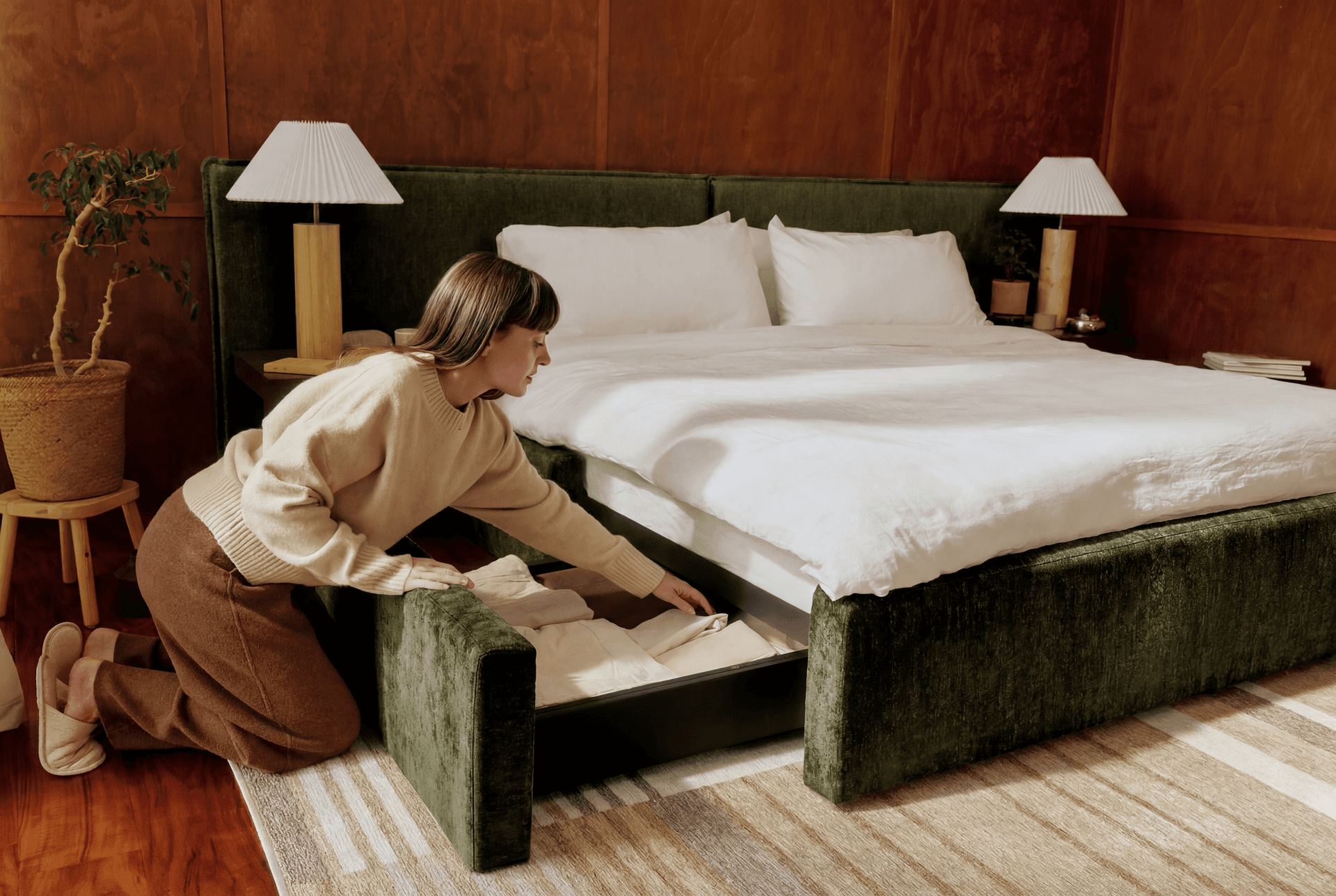
Storage beds
A platform bed with storage has built-in drawers integrated into the base. In a small bedroom, this is the most space-efficient furniture decision you can make. A standard storage bed with four drawers provides enough capacity to replace a standalone dresser entirely, which frees up the floor space a dresser would have occupied for something else, or simply makes the room easier to move around in.
The calculation is straightforward: a dresser typically occupies 3 to 5 square feet of floor space. In a bedroom under 150 square feet, that is a meaningful portion of usable area. Moving that storage into the bed base removes the dresser from the floor plan without reducing your storage capacity.
Before buying, confirm which side the drawers open on and whether you have enough clearance on that side of the bed.
Under-bed storage without a storage bed
If a storage bed is not the right fit, the space beneath a standard platform bed can be used for flat storage containers. This works best for seasonal items, such as extra bedding, off-season clothing, or spare pillows, that you access infrequently. Use containers with lids to keep contents dust-free, and measure the clearance height under your specific frame before buying containers.
Note that low-profile platform beds may have limited under-bed clearance. Check the frame height before planning under-bed storage as a primary strategy.
Dressers and vertical storage
When a dresser is necessary or preferred, the orientation matters more than the size. A tall, narrow dresser uses less floor space than a wide, low one while providing comparable or greater storage volume. In a small bedroom where every square foot of floor counts, a dresser footprint of 18 by 30 inches is considerably more practical than one at 18 by 60 inches, even if the total drawer count is similar.
Place the dresser in a corner or against the wall adjacent to the door, not opposite the bed, where it competes visually with the room's focal point and can make the space feel more enclosed. Vertical space above the dresser can also be used for shelving if wall mounting is an option in your space.
Nightstands: drawers over open shelves
A nightstand with one or two drawers provides meaningfully more practical storage than an open-shelf alternative of the same size. Open shelves can create visual clutter; drawers contain it. In a small bedroom where visual tidiness affects how spacious the room feels, this is a functional consideration as much as an aesthetic one.
If floor space is very limited, a wall-mounted shelf or floating nightstand at bed height eliminates the footprint entirely while still providing a surface.
The foot of the bed
The space at the foot of the bed is often left empty or used for a purely decorative bench. An ottoman with internal storage is a more practical option: it provides a seating surface, a place to set items when making the bed, and concealed storage for bulky items like extra blankets, cushions, or off-season accessories.
Choose an ottoman sized to the width of the bed frame or narrower. An oversized piece at the foot of a small bed reduces the walkway between the bed and the door.
Non-furniture storage for what remains
Once furniture choices are optimised, smaller organisational additions handle the remainder. These work best as supplements to good furniture decisions, not replacements for them:
- Over-door hooks and organisers on the back of the bedroom or wardrobe door add hanging storage without occupying wall or floor space.
- Hooks on the wall beside the door provide accessible storage for items used daily, such as bags, jackets, and belts, that would otherwise end up on the floor or the back of a chair.
- Drawer dividers inside existing drawers significantly increase usable capacity without adding any furniture.
For guidance on completing the room, bedroom rug sizing covers how to choose a rug that fits the space without making a small room feel smaller.