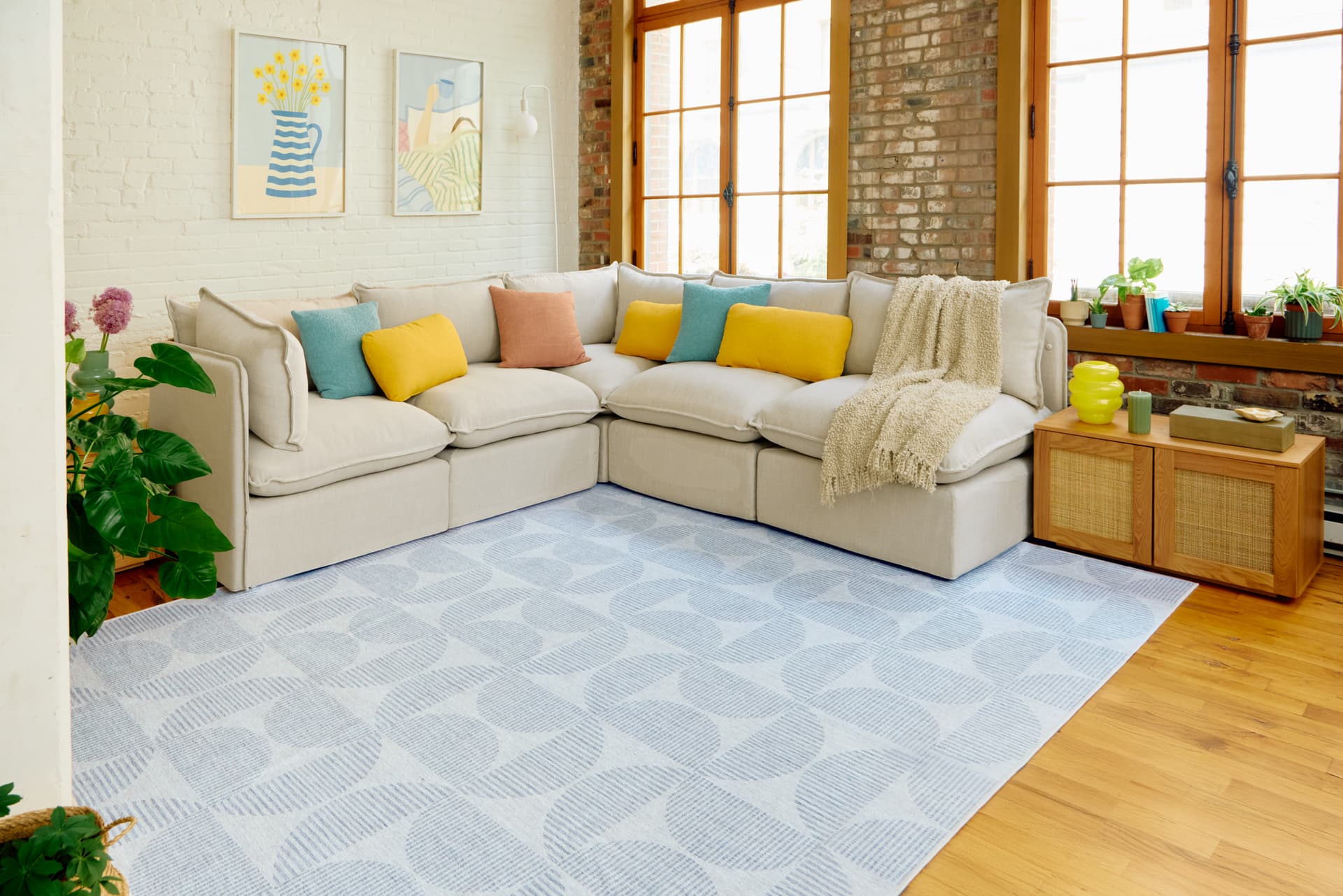
Choosing a rug comes down to three decisions: size, material, and placement. Get the size wrong and the room feels off-balance. Choose the wrong material for how the space is used and the rug will either wear out quickly or be difficult to maintain. This guide gives you a framework for each decision so you can make the right call before buying.
How to choose the right rug size
Rug sizing mistakes are the most common and the most visible. A rug that is too small floats in the middle of the room without anchoring anything; one that is too large eliminates the visual contrast between the rug and the floor that gives the room definition. The rules below apply to the three rooms where rugs are most commonly used.
Living room rug sizing
In a living room, the rug should be large enough that the front legs of all major seating pieces, including the sofa, chairs, and sectional, sit on it. This connects the furniture into a unified seating zone rather than leaving pieces isolated on bare floor.
As a starting point: an 8x10 rug works for medium living rooms; a 9x12 suits larger rooms or open-plan spaces. If you are unsure between two sizes, go larger. A slightly oversized rug reads as intentional; an undersized one reads as a mistake.
Bedroom rug sizing
A bedroom rug should extend at least 18 inches beyond each side of the bed. This ensures you step onto the rug when getting out of bed rather than onto a cold floor, and it gives the rug enough presence to anchor the bed visually.
For a Queen bed, an 8x10 rug placed with the top edge under the lower third of the bed typically achieves the right proportions. For a King, a 9x12 is more appropriate. An alternative approach is to use two smaller rugs placed on either side of the bed, which works well in rooms where the bed sits against a wall and a full rug would be largely hidden.
Dining room rug sizing
A dining room rug needs to extend at least 24 inches beyond the table on all sides. This ensures chairs remain on the rug when pulled out; a chair leg catching the rug edge every time someone sits down damages the rug's edge over time and is a practical frustration.
For a standard six-seat dining table, a 9x12 rug is typically the minimum. Measure your table and add 48 inches to both dimensions to calculate the minimum rug size needed.
How to choose the right rug material
Material affects durability, maintenance, and how the rug feels underfoot. Match the material to how the room is actually used, not just how it looks in a product photo.
Wool is a durable natural fibre that holds its appearance well in lower-traffic rooms. It has a dense, cushioned feel underfoot and handles light spills reasonably well with prompt blotting. It is not the best choice for rooms with pets or children, as wool requires careful cleaning and does not tolerate machine washing. It suits a bedroom or formal living room that sees moderate foot traffic.
Polyester and synthetic blends are the most practical choice for high-traffic areas. They are stain-resistant, fade-resistant, and significantly easier to clean than natural fibres. For entryways, hallways, or any room with heavy daily use, a synthetic rug is the more durable option.
Jute and natural fibre rugs have a textural, woven appearance that works well in living rooms and studies. They are not suitable for wet areas, kitchens, or rooms with pets, as moisture causes jute fibres to shrink and discolor, and the open weave traps pet hair in a way that is difficult to clean.
Washable synthetic rugs are the most practical option for families and pet owners. The machine-washable construction means you are not limited to spot cleaning; the rug can be washed thoroughly when it needs it, not just maintained at the surface. Cozey's washable rugs are designed for this use case: machine washable on a cold gentle cycle, with non-slip backing for hard floors.
For care instructions by material type, see how to clean your rug.
Rug placement: what works and what to avoid
Beyond sizing, where and how you position the rug affects how the room reads.
Rugs and furniture legs: In a living room, the front-legs-on approach, where the front legs of the sofa and chairs sit on the rug and the back legs sit off, works well in most standard-size rooms and requires a smaller rug than placing all four legs on. All-legs-on works better in larger rooms where a bigger rug does not crowd the room's perimeter.
Rug orientation: In a rectangular living room, orient the rug to match the longer axis of the room. In a square room, either orientation works, but keep it consistent with the furniture arrangement.
Rug shape: Rectangular rugs suit most rooms and most furniture configurations. Round rugs work well under a round dining table or as an accent piece in a bedroom corner. Avoid round rugs in rectangular living rooms unless the seating arrangement is specifically built around the shape.