The fabric types available for sofas vary significantly in durability, texture, and how much maintenance they require. Choosing the wrong upholstery for your household, such as a delicate weave in a high-traffic room or a hard-to-clean fabric in a pet-friendly home, is one of the most common and costly mistakes in sofa buying. This guide covers the main couch fabric types so you can match the material to your actual situation.
The main sofa fabric types compared
Performance fabric
Performance fabric is a synthetic or blended upholstery engineered for durability and ease of cleaning. The defining characteristic is a tight, dense weave combined with a stain-resistant finish. Spills sit on the surface rather than absorbing immediately, which gives you time to blot them away. The tight weave also resists surface snagging from pet claws better than loosely woven materials.
It is the most practical choice for families or pet owners. Sofas upholstered in performance fabric can typically be wiped clean with a damp cloth for everyday maintenance, and on sofas with removable covers like the Ciello sofa, the covers can be machine washed cold and laid flat to dry.
Cozey's performance fabric, Aquaforte, is a polyester-based upholstery developed specifically for the brand's sofa range. It combines the stain-resistance and tight weave of standard performance fabric with removable, machine-washable covers and a soft hand feel. For households where cleanability is a priority, it is the most capable option in the range.
The tradeoff is that performance fabric has a more uniform, structured appearance compared to natural or textured fabrics. It is not as visually soft as boucle or chenille.
Boucle
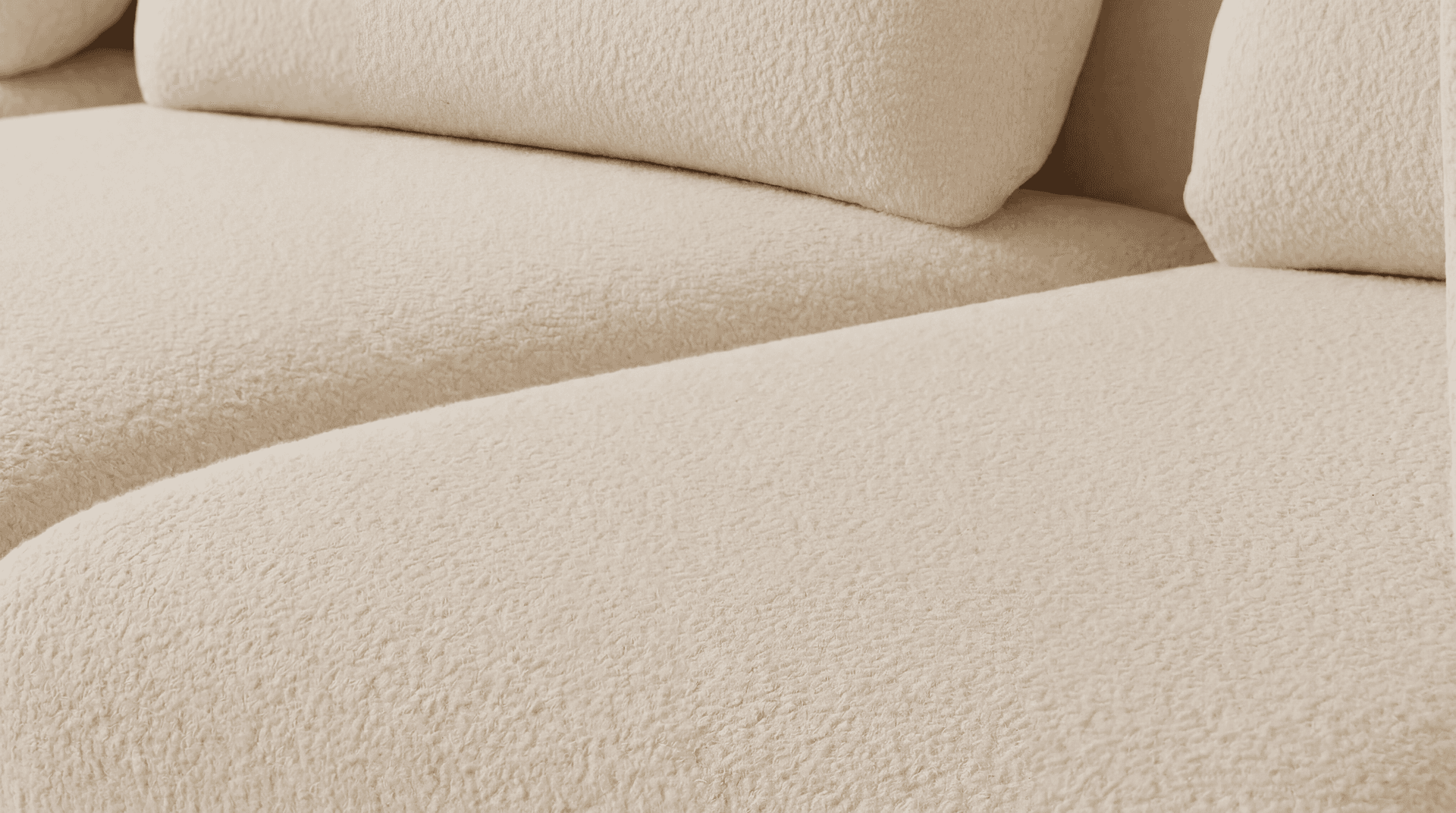
Boucle is a looped, textured fabric with a distinctive appearance. It has become popular in contemporary furniture because of its tactile quality and visual depth. The looped structure creates a surface that looks soft and dimensional.
The practical drawbacks are real, however. The loops can catch pet claws easily, leading to pulls and snags over time. Cleaning requires a gentle hand: scrubbing or excessive moisture can distort the loops permanently. Boucle suits lower-traffic use, such as a sofa in a home office or a secondary living room that does not see heavy use.
If you do choose boucle, refer to guidance on how to clean each fabric type before attempting stain removal.
Chenille
Chenille is a soft, velvety fabric made from short fibres twisted around a core yarn. It has a plush, warm feel that many buyers find appealing. Over time, however, standard chenille is prone to pilling: small fibre balls forming on the surface, particularly in areas of regular contact like seat cushions and armrests. Performance chenille, with a rub count over 40,000, provides higher durability and longevity.
Velvet
Velvet has a dense pile that gives it a rich, matte appearance. Like chenille, it shows wear patterns over time as the pile flattens in high-contact areas. It is susceptible to watermarks and requires careful, fabric-specific cleaning. Velvet tends to show pet hair more visibly than tighter-weave fabrics.
It is better suited to occasional use or households without pets. If the visual appeal of velvet is important, look for performance velvet variations, which apply a protective finish to improve stain resistance.
Natural linen and cotton blends
Natural fabrics like linen and cotton blends have a relaxed, breathable quality. They are comfortable across seasons and tend to soften with use. The downside is that they absorb moisture quickly, which makes spills harder to manage, and they are generally less resistant to wear than synthetic or blended options.
Linen in particular wrinkles and can pill over time. Cotton blends are more durable than pure linen but still require more maintenance than performance fabric. Both are reasonable choices for households with low daily sofa traffic.
Fabric vs leather sofas
Fabric and leather sofas suit different households. Leather is durable, easy to wipe clean, and does not absorb odours the way fabric can. The drawbacks are cost, temperature sensitivity (leather can feel cold in winter and sticky in heat), and the fact that deep scratches from pet claws are difficult to repair.
Fabric sofas generally offer more texture and warmth, a wider range of visual options, and when upholstered in performance fabric with removable covers, a more practical long-term cleaning solution than leather alternatives.
How to match fabric type to your lifestyle
The right fabric depends on three factors: who uses the sofa, how often, and how much maintenance you are willing to do.
Performance fabric's stain resistance, tight weave, and compatibility with machine-washable covers reduce ongoing maintenance significantly. Covers can be washed cold and laid flat to dry, keeping the process straightforward even with frequent cleaning. Browse the Cozey sofa collection to see available fabric options.
Design-led, lower-traffic use: Boucle offers a distinctive texture that performance fabric does not replicate. It is a reasonable choice if the sofa is in a secondary space or a household without pets or young children, and you are prepared to clean it carefully.
Mixed-use households: A performance fabric sofa that allows cover replacement gives you the option to swap fabric types later if your circumstances change, for example if you add a pet to the household after purchase.
For a deeper look at how the weave structure and finish affect durability and cleanability, see the performance fabric guide.